

Breast Cancer
Searching for a Clinical Trial
Clinical trials present many potential benefits for anyone with breast cancer such as the opportunity to access leading-edge treatments that aren’t yet widely available. For example, the first targeted therapy was approved for triple negative breast cancer (TNBC). Although the targeted therapy was originally developed for a different cancer type, research through clinical trials discovered it could be useful in TNBC.
Many clinical trials are currently taking place to evaluate different components of breast cancer treatment, including using older and newer chemotherapies in different combinations; testing targeted therapies that have been successful in other cancers; evaluating if immunotherapy offers treatment potential; determining if antiandrogens could be used; developing new lab tests to identify biomarkers and subtypes; assessing new imaging tests, such as molecular breast imaging; and analyzing new surgical techniques, such as oncoplastic surgery.
Ask your doctor if participating in a clinical trial is an option for you. Understanding how to navigate an online clinical trial site, and enlisting the help of friends and family to help you, can make your search much less overwhelming.
Below are screenshots from a mock clinical trial search site to give you an idea of what to expect and help you decipher the medical jargon. Each clinical trial has certain criteria you must meet to be eligible to participate. Before you begin, have your exact diagnosis, pathology report and details of previous treatments handy.
If you find a clinical trial that appears to be a good fit but is no longer accepting patients, you may be eligible for expanded access. Also referred to as compassionate use, this is a program that extends the access of an investigational treatment or medical product outside of its use in a clinical trial. To obtain permission, your doctor must submit an application to the U.S. Food and Drug Administration (FDA), and permission must be granted by the company that provides the medical product. If you don’t find a clinical trial, know that new clinical trials are being added all the time. You may choose to continue searching while you move forward with your current treatment plan.
Searching for a Clinical Trial
Be an active participant in your own care by looking online at available trials. These step-by-step instructions will help guide you. Once you feel comfortable with the search process, use the list of clinical trial resources below to look for a trial that may apply to you.
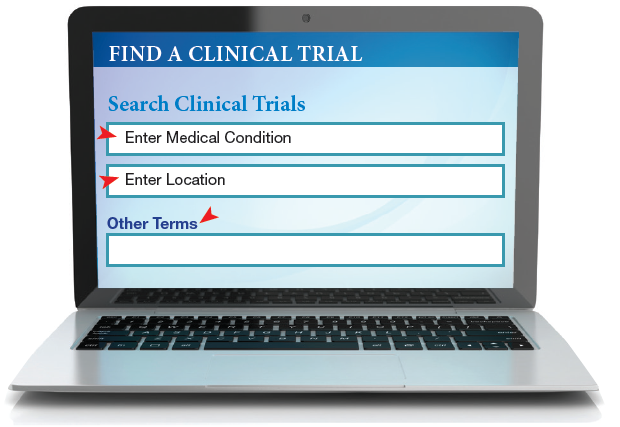
[STEP 1] FILL IN YOUR INFORMATION
Your Diagnosis
Enter "triple negative breast cancer". To create more options, you can also search for "TNBC" and compare results.
Desired Location
If you prefer a clinical trial close to home, use your address. Enter additional locations if you're willing and able to travel for treatment.
Other Terms
You can refine your search by adding a treatment type such as immunotherapy, a specific drug or a National Clinical Trial (NCT) identifier. During your research, you may notice that an NCT identifier is assigned to each clinical trial. Identifiers begin with the letters "NCT" followed by eight numbers.
[STEP 2] READ YOUR SEARCH RESULTS
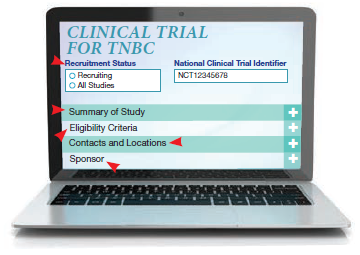
Recruitment Status
This indicates whether the trial is actively seeking patients, not yet recruiting or otherwise inactive. The status will change, so check for updates.
Summary of Study
Here you'll find details about the purpose of the clinical trial and the treatment being studied. This section is usually written for health care providers, so it may be difficult to understand. In that case, print out the information to discuss with your doctor.
Eligibility Criteria
This outlines the requirements you must meet to be eligible for the trial, such as the stage of disease, sites of metastasis, overall health requirements and previous treatments.
Contacts and Locations
This may contain contact information for the clinical trial investigators, staff or sponsors who may be able to provide more details about the study. Trial locations may be included.
Sponsor
This is the organization responsible for the clinical trial. It may be a pharmaceutical or a biotechnology company, a university or the National Cancer Institute.
Clinical Trial Resources
- ACT (About Clinical Trials)
- BreastCancerTrials.org
- Center for Information & Study on Clinical Research Participation
- CenterWatch
- ClinicalTrials.gov
- Facing Our Risk of Cancer Empowered
- Lazarex Cancer Foundation
- LIVESTRONG Foundation
- Metastatic Breast Cancer Trial Search
- National Cancer Institute
- SHARE Cancer Support
- TNBC Foundation Clinical Trials Matching Service
