

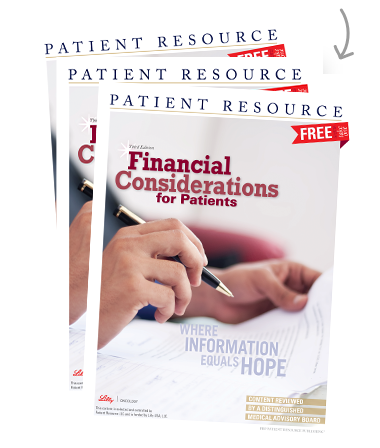
Financial Considerations
Understand the Costs Related to Cancer
When you find out you have cancer, you probably don’t initially think of the financial burden you’re facing. You want to spend your energy getting healthy and back to a normal life, and then figure out the rest later. The financial aspect of cancer, however, can have a huge impact on your overall health, happiness and well-being during your cancer journey, and feeling confident about your finances can help you tackle your treatment wholeheartedly.
The cancer-related expenses you experience will be unique to you, dependent on your diagnosis, your recommended treatment plan, your follow-up care and your level of insurance coverage. Managing these expenses is crucial: A 2013 study found that people with cancer are more than twice as likely to declare bankruptcy than people without cancer. Understanding your insurance, planning your budget and seeking financial assistance can keep you from becoming a part of this statistic. By spending the time to increase your knowledge and management of financial matters, you can take control of your financial situation right from the start.
Types of cancer-related costs
Cancer-related costs can be grouped into two types of expenses: medical and lifestyle. The medical expenses – including medical office visits, tests, treatments, drugs and caregiving – are the most obvious additions to your spending.
Less obvious are the increases in your routine living expenses because of new, cancer-related costs. After a cancer diagnosis, you may spend more money on transportation and travel, legal help and financial services. You may also need to hire help for child or elder care, meal preparation or housecleaning. And if possible, you might want to set aside extra money to enjoy special activities or trips with your family and friends to help ease the stress of this difficult time. These additional expenses are a heavy burden on their own but are even more substantial when combined with the possibility that your income may be reduced if you and/or your significant other are unable to work the same number of hours during your treatment.
Unfortunately, your cancer-related costs don’t end when your treatment is over. One study found that male survivors spend $4,000 more and female survivors spend $3,000 more than their cancer-free peers every year. You will need to budget for follow-up care, frequent screenings and checkups, and you might have to adjust to a permanently reduced income if you aren’t able to return to your regular work hours.
Talk to your health care team
Cancer-related costs can add up quickly, so it’s vital to talk to the members of your health care team about the cost of your cancer care. They understand that treatment can be expensive and may create financial hardship, so don’t be embarrassed to bring it up. One study found that while more than half of the patient participants wanted to talk to their doctors about costs, only 19 percent actually did—and it paid off. Fifty-seven percent of the patients who had conversations with their doctors about their financial concerns felt that it helped significantly decrease their costs, and even more felt it decreased their anxiety during the course of their treatment.
Many people are hesitant to ask about cutting costs because they fear their treatment will suffer. However, depending on your specific insurance coverage, your doctor may be able to prescribe alternative treatment options that are less expensive but just as effective. For example, intravenous chemotherapy drugs given in your doctor’s office are usually covered by medical insurance, but oral chemotherapy drugs that you take at home are usually covered through the insurer’s prescription benefit program. In either case you may have to pay out-of-pocket expenses, but one option may be much cheaper than the other.
Your health care team is an excellent resource for answers to your financial concerns. Be sure to talk to the financial staff at your doctor’s office about your insurance policy and out-of-pocket expenses.
Seek financial assistance
Before you become totally overwhelmed, know that there are hundreds of resources that provide financial assistance in a variety of categories, including child care, personal items (wigs, mastectomy bras, ostomy supplies, etc.), counseling services, legal help, wish fulfillment and transportation.
Social workers, advocates, financial counselors and patient navigators at your medical facility can refer you to local organizations that can help, and many advocacy groups and other nonprofit organizations will also point you toward sources of financial assistance. Federal laws also offer benefits, protect you from the loss of health insurance and guard against discrimination on the basis of your health. And don’t forget your family and friends. They can help you search for financial assistance and offer advice on what would be most helpful for you.
