


Leukemia
Overview
Leukemia is a form of blood cancer that starts in the blood and bone marrow and occurs when white blood cells transform into leukemia cells and grow uncontrollably. It is categorized into four major types based on how fast it progresses and the type of white blood cell it affects. This differentiation is critical because it helps your doctor understand how your disease may behave and identify the treatments that will be most effective. If you are unsure about the details of your diagnosis, ask your doctor to explain.
About Leukemia
Although it occurs mostly in adults who are 55 and older, leukemia can affect any age group and is the most common cancer affecting children and young teens.
Normal white blood cells help the body fight infections, and when they become old or damaged, they die and are replaced by new, healthy cells. However, large numbers of the leukemic cells accumulate in the bone marrow and/or the blood and may slow down or prevent normal body functions, including the bone marrow’s normal production of healthy blood cells (see Figure 1). People with leukemia often have low numbers of healthy white blood cells, red blood cells and platelets, increasing the risk for infection, anemia and bleeding.
Leukemia is characterized as acute or chronic and lymphocytic or myeloid, with four major types: acute lymphocytic leukemia (ALL), acute myeloid leukemia (AML), chronic lymphocytic leukemia (CLL) and chronic myeloid leukemia (CML).
Acute leukemia cells look similar to healthy immature white blood cells and are also called “blasts.” The number of blasts increases rapidly, preventing the bone marrow from making normal blood cells. Consult a leukemia expert and begin treatment as soon as possible because these fast-growing cells can quickly become life-threatening.
Chronic leukemia cells look similar to healthy, mature white blood cells, but the cells are unable to mature and function fully. The leukemia cells grow slowly, and the progression of chronic leukemia varies. Like acute leukemia, chronic leukemia is also classified as lymphocytic or myeloid (myelogenous) based on the type of cells in the bone marrow that become abnormal.
Lymphocytic leukemia begins in cells that become lymphocytes. Lymphocytic leukemia is also called lymphoid or lymphoblastic leukemia.
Myeloid leukemia begins in early myeloid cells, which become white blood cells (with the exception of lymphocytes), red blood cells or cells that make platelets. Myeloid leukemia is sometimes called myelogenous, myelocytic or myeloblastic leukemia.
Diagnostic Tests
One or more of the following tests will be used to determine your form of leukemia:
- Physical examination
- Blood tests, including a complete blood count and a peripheral blood smear
- Bone marrow aspiration and biopsy (often done at the same time)
- Lumbar puncture (spinal tap) in some cases
- Specialized tests, such as flow cytometry, cytogenetics and fluorescence in situ hybridization (FISH) and molecular profiling, help to classify the subtype and often to select treatment
- Imaging tests (CT, PET, MRI and X-rays) to help determine the extent of disease outside the bone marrow
Leukemia Blood Cells
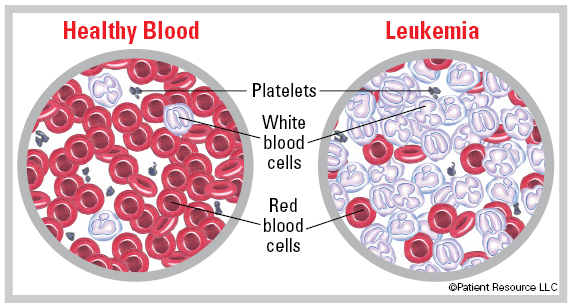 Leukemia is cancer that starts in blood-forming tissue, such as the bone marrow, and causes white blood cells to grow uncontrollably. These cells do not function as expected, meaning they do not fight infection or die as they should. They also overcrowd healthy white blood cells, red blood cells and platelets in the bone marrow, preventing them from functioning properly.