


Mouth Sores
Maintain good oral health
Mouth sores (oral mucositis) are tiny sores that begin in the mucous membrane lining in the mouth and become red, burn-like or ulcer-like. They can also affect the gums, tongue, roof of the mouth or lips, a condition called stomatitis. Mouth sores sometimes begin as mild pain or burning, followed by white patches that may become large, red lesions. Pain may range from mild to severe, making it difficult to talk, eat or swallow. Infection may develop if bacteria enter the open sores.
What causes mouth sores?
The cells of the mucous membranes in the mouth divide rapidly, so they may become damaged and inflamed by drug therapies and radiation therapy. People who receive a bone marrow/stem cell transplantation are at high risk for mouth sores because of the chemotherapy or radiation therapy that typically accompanies those treatments.
When do mouth sores typically occur?
Mouth sores usually develop within a few days after treatment begins and heal within 2 to 4 weeks after it ends. If your treatment plan includes a therapy with a high likelihood of causing mouth sores, ask about intravenous medication that may be used before treatment to help prevent them. Sucking on ice chips during the first half-hour of your treatment may help. This will reduce the likelihood of mouth sores because the cold limits the amount of the drug that reaches your mouth.
How you can manage mouth sores.
Managing mouth sores involves taking steps to minimize pain or discomfort and to help them heal.
Take care of your oral care.
- Check your mouth more than once a day using a small flashlight and a mirror. Let your health care provider know if you see or feel anything different or notice taste changes.
- Brush your teeth, tongue and gums with a soft-bristled toothbrush 30 minutes after eating, every 4 hours and at bedtime.
- Avoid toothpastes that contain additional ingredients such as whiteners. Use a nonabrasive fluoride toothpaste or a solution of 1 teaspoon of baking soda in 2 cups of water. Brush your teeth gently; if using a toothbrush is painful, use a soft foam swab (available at drug stores).
- Rinse your mouth several times a day and after eating. Use a mixture of 1 tablespoon of baking soda in 1 quart of warm water, or ask your health care team to recommend a solution.
- Keep lips moist with unscented lip balm. Do not use petroleum jelly or other oil-based products as they may promote infection.
Avoid products that may dry or irritate the mouth. This includes mouthwashes that contain alcohol, glycerin swabs, alcoholic beverages, cigarettes, cigars, chewing tobacco and similar items.
Adopt certain dietary habits. Aim for drinking two to three quarts of fluid per day. Use a straw. Eat soft foods that are cut into small pieces and kept at room temperature or slightly warm. Getting the proper nutrients during and after cancer treatment is critical to promote healing and avoid dehydration and malnutrition. Avoid hot, spicy, greasy or fried foods; very salty or high-sugar foods; sharp or crunchy foods; citrus fruits and juices; caffeine and carbonated beverages.
Take special precautions with dentures. Remove and clean dentures between meals regularly. Leave them out whenever possible to expose your gums to air. Wear dentures that fit properly. Loose-fitting dentures may irritate the mouth and gums. Be aware that dentures may become loose if you lose weight. Do not wear dentures if mouth sores are severe.
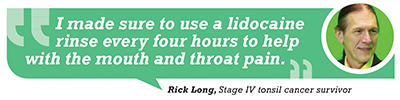
Relieve pain. Suck on ice chips. Apply topical, local anesthetic solutions or gels, such as lidocaine. Use oral analgesia or intravenous analgesia with opioids as prescribed by your health care provider. Rinse with a medicated mouthwash prescribed by your health care provider to decrease inflammation and yeast infections. Use topical corticosteroids on irritated areas of the tongue, mouth or lips.
When to call your health care provider.
Call when you first notice any type of sore in your mouth. A special mouth rinse, medication that coats the lining of your mouth or pain medication that can be applied topically may be an option.
- An oral temperature of 100.4°F or higher
- Inability to take medications
- Redness or shininess in the mouth that lasts for more than 48 hours
- White patches on the tongue or inside the mouth
- Bleeding gums
- Inability to eat or drink much for 2 days
